Introduction/Abstract
In June, I was fortunate to experience low tide near Seattle! Low tide got down to minus 4 feet, exposing a whole new world of marine life. I’ve spent most of my time as a wildlife photographer looking up at trees and birds or hunched over insects. This low tide brought me back to the summer I taught a marine biology class to middle schoolers.
Why “Minus Tide” is Worth Chasing
Not all tides are created equal. A “minus tide” refers to when a tide drops below the average low water line. The lower the number, the more of the intertidal zone gets exposed and the more life you can see. A minus 4 foot tide is significant and exposes zones of the shoreline that are normally underwater for most of the year.
Minus tides usually happen a few times a month, usually tied to new and full moons with the best ones clustering around spring and summer. This is great too since they fall during the day instead of well past nightfall. I use a tide chart app to arrive to the beach about an hour before the lowest point. This gives me time to explore as the tide recedes.
Life in the Tide
Once the water pulled back, I couldn’t believe how much wildlife was sitting there just waiting to be found.
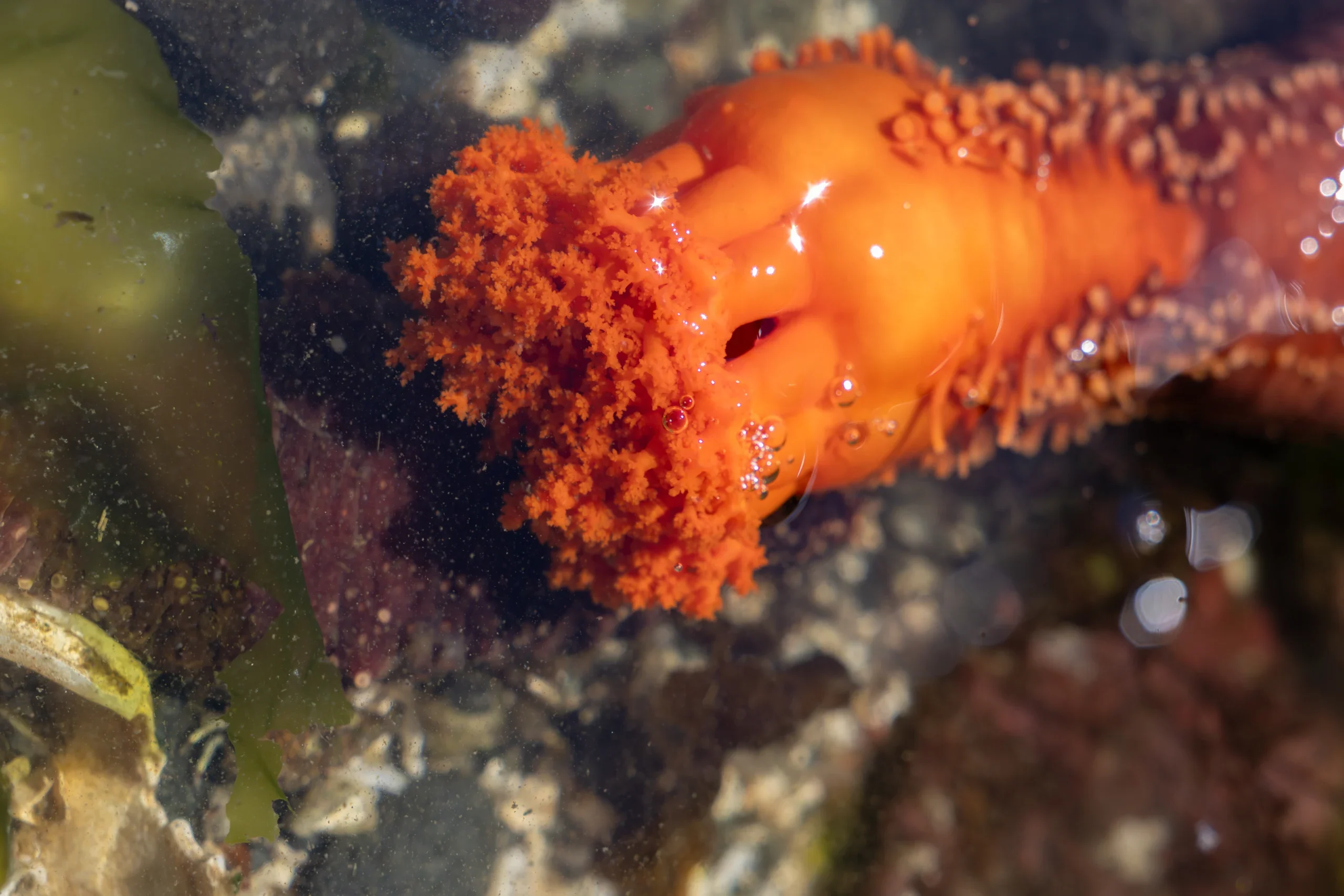
Sea Cucumbers I was surprised just how many sea cucumbers I spotted. These soft bodied organisms are related to sea stars and sea urchins that filter their food through the water. I’m far from an expert but I believe the one shown below is a giant red sea cucumber. The majority of the ones I spotted were about the size of my hand (~20 cm), I was lucky enough to find some that were almost twice that size! Shown below (again, as a non-expert) are the feeding tubes of the sea cucumber!
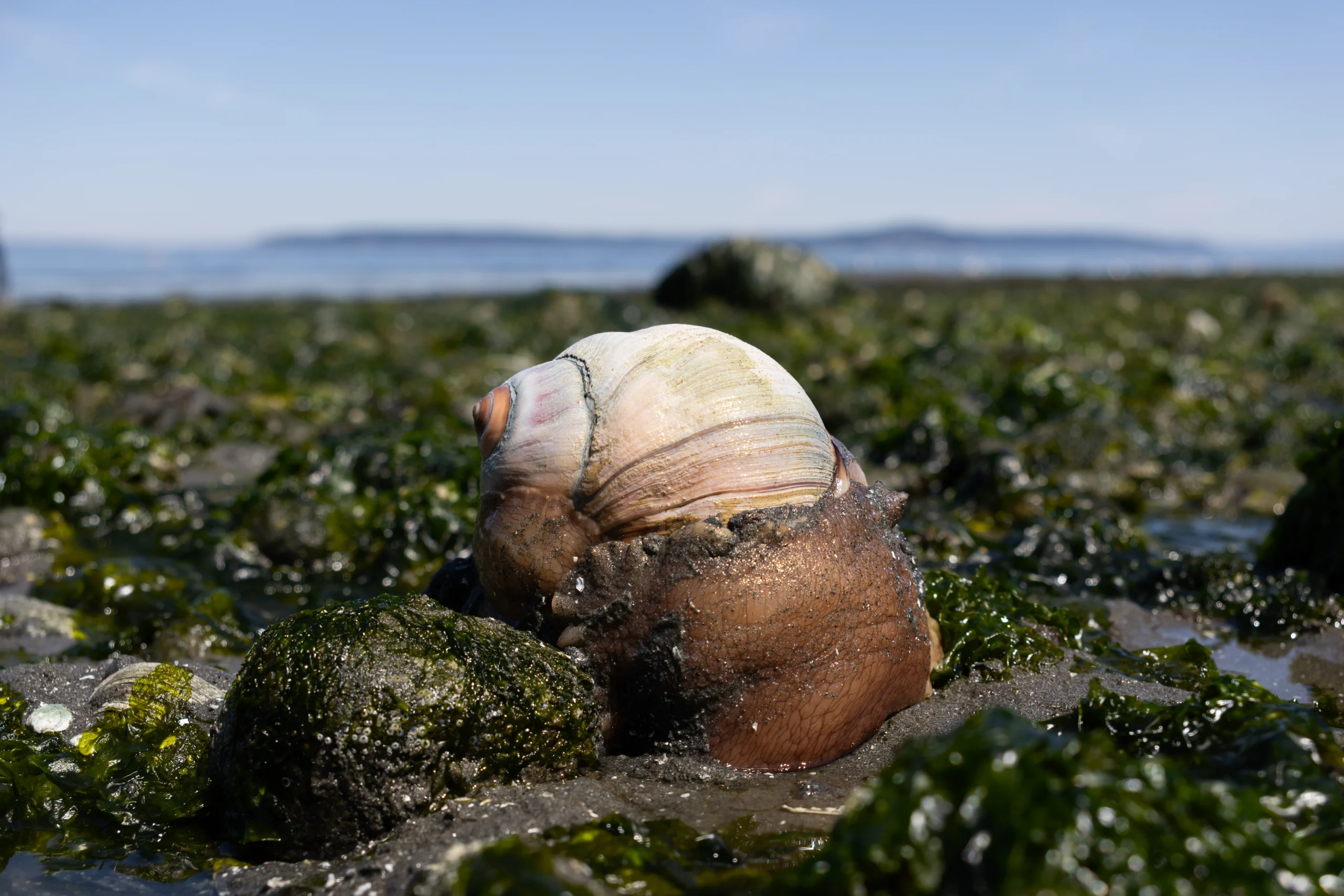
Moon Snails The most exciting find were the moon snails! These snails will lay thousands of eggs in a structure of mucus and sand called a sand collar. I found about a dozen of these gray, rubbery crescent sand collars before finding my first moon snail. Moon snails will also eat other snails and clams, leaving an empty shell with a small hole. When I finally found one, I was blown away at just how big a snail could get. They were nothing like the smaller, common land snails I was used to.
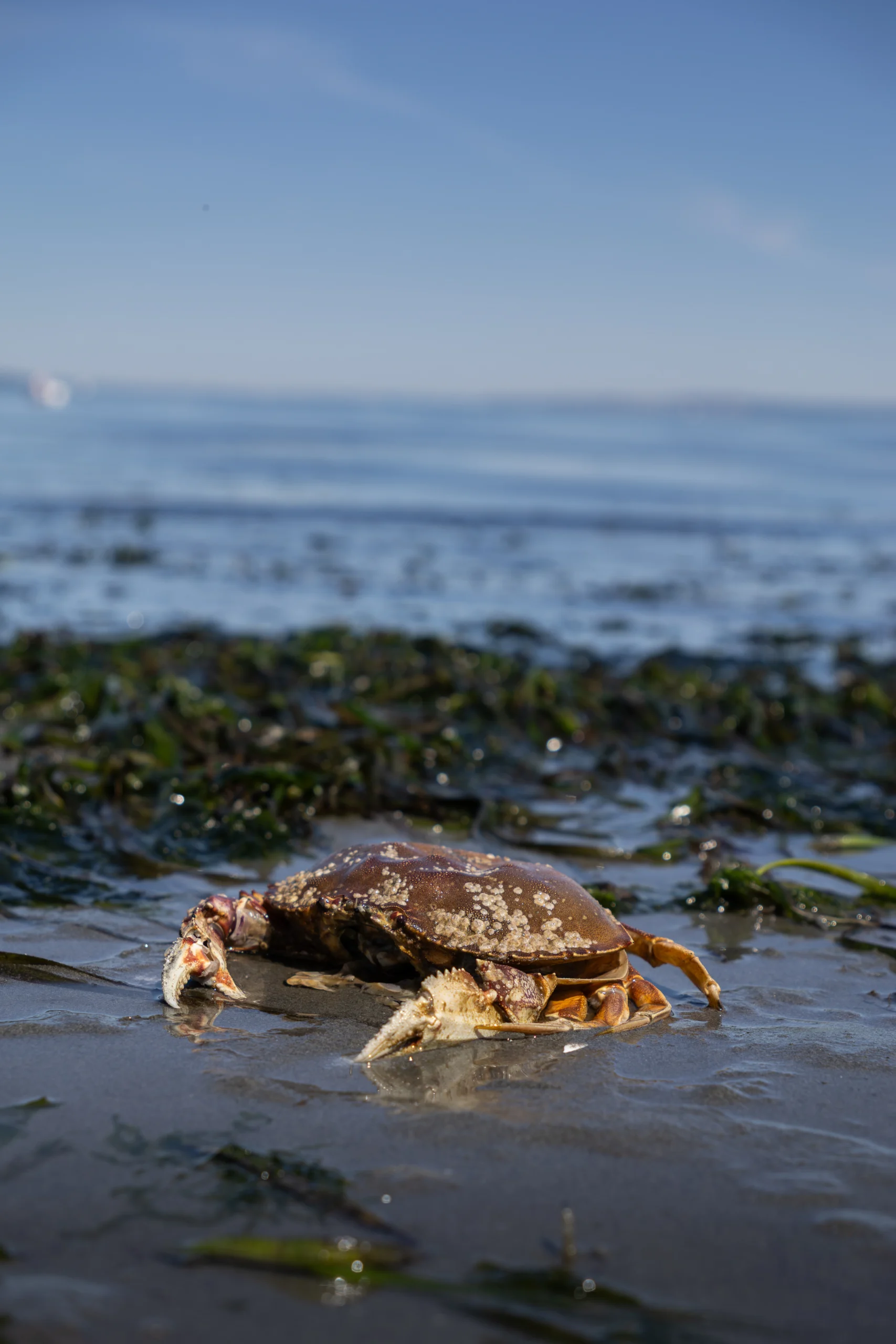
Crabs No tide pool trip is complete without dozens, maybe even hundreds of crabs skittering around rocks. These decomposers, cleaning up the dead organisms and waste in the ocean. Although many of the crabs were small (smaller than my thumb), I was able to spot some that were as large as my hand!
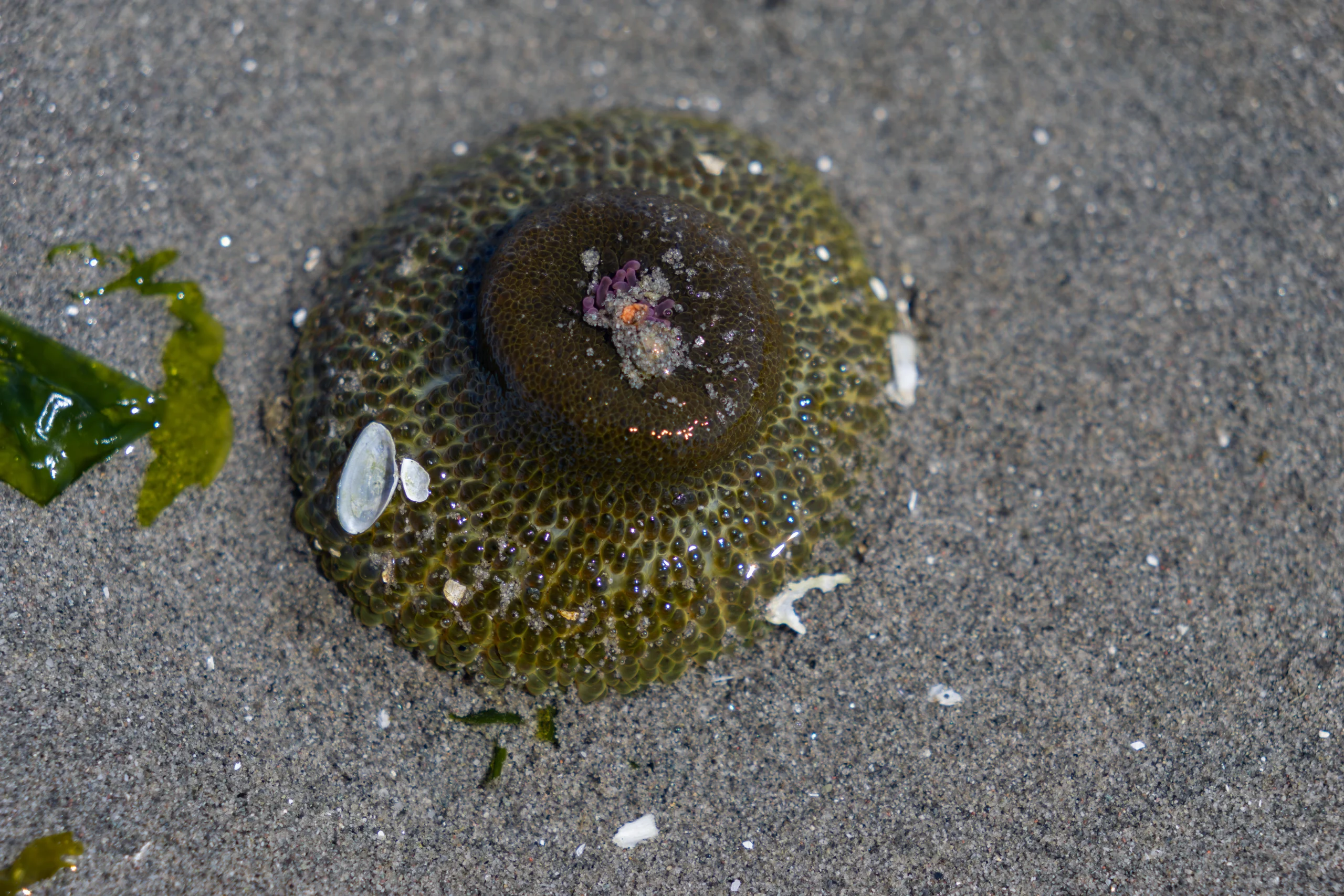
Sea Anenomes Sea Anenomes were some of the most visually striking things I found in the tide pools! They often look like plants with clusters of soft tentacles flowering out from their central body. These tentacles sting tiny prey and pull them into their center. Many of the sea anenomes I saw were out of the water which causes them to close up. Unfortunately, even the ones underwear were closed up as well due to so many people touching them. Despite this, it was cool to see just how many there were!
As I explored the tide, I met a couple of volunteer naturalists! They were walking around, answering questions, and had visual guides to help people identify exactly what they were looking at! They were also great to stick close to since they frequently pointing out cool organisms. They talked about the sea star wasting disease and gave a lot of context to my tide pool experience. As someone who isn’t from Washington, this was especially helpful!
Tide Pool Etiquette
It was obvious as I walked around, there was life everywhere. What wasn’t super obvious was what I should and shouldn’t be doing. A lot of these organisms aren’t used to being out of the water so I definitely didn’t want to make their lives worse. After talking to the naturalists, here are some things I picked up.
- Tread carefully! I saw moon snails burrowing, blending into the sand or movement under beds of sea weed. If I couldn’t see exactly what I was stepping on, I would find another way.
- If I lifted a rock (which I rarely did), I would put it back exactly and gently back to where I found it. I also spotted sea cucumbers peeking underneath rocks and I left those alone. I wouldn’t want to squish one when I put the rocks back!
- Look and don’t touch! I learned about sea star wasting disease from the naturalists and how I could spread diseases around by touching animals. My hands were for taking pictures, not for poking and prodding.
I also brought a kiddo out to the tide pools where I went over tide pool etiquette and really emphasized this next point. This etiquette is not to discourage people, it’s to keep the animals and tide pools alive! So that next time the tide is out, we can still experience it to the fullest.
WILD Education
This trip reinforced something that keeps me coming back to WILD Education: learning about the natural world is accessible to everyone. This experience for me was free and there were spots just 30 minutes away from where I lived. I was fortunate to bring a kiddo out to the tide pools as well which was a great opportunity for them to learn about marine life, empower them to share their knowledge, and spark curiosity in a way that spotting a bright red sea cucumber can do.
I would love to build out more marine focused content as WILD Education grows! As much as I liked seeing marine life out of the water, a wildlife cam underwater would be incredible to make. I also think partnering with local programs and organizations to bring more awareness and unlock more ways to get the community involved would be great next steps to take.
Conclusion
You don’t need fancy equipment, a wet suit or degree in marine biology to have great experiences in nature! All you need is a tide chart and a little patience. If you’ve never gone tide pooling, keep an eye out for the next big minus tide near you. Many organizations (aquariums, parks, nature centers, etc.) might also know when would be a good time to go tide pooling
References
https://marinespecies.wildlife.ca.gov/giant-red-sea-cucumber/the-species/
https://backtothebays.org/blog/2022/moonsnail
https://www.pugetsound.edu/puget-sound-museum-natural-history/exhibits/marine-panel/moon-snail